US restricts remote access to advanced AI chips in new Commerce rule
Commerce's interim rule requires licenses for data centers serving firms based in China and other D:5 countries, and for chip exports to five countries.
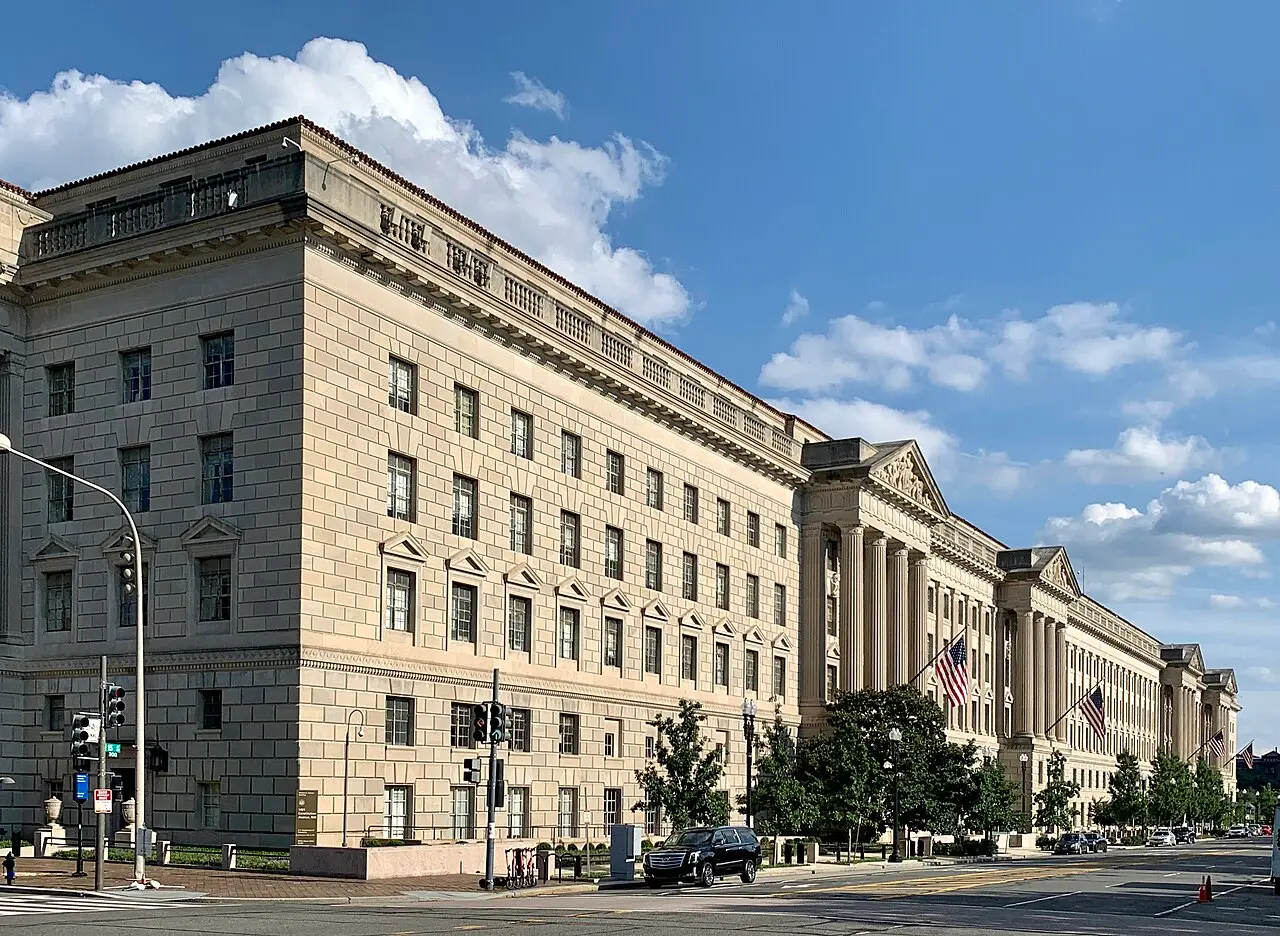
What the Commerce Department released
The U.S. Commerce Department's Bureau of Industry and Security (BIS) issued an interim final rule on Nov. 16, 2026 that requires licenses for exports of advanced AI chips and servers to data centers that supply large amounts of computing power to companies headquartered in China, Macau and other Country Group D:5 destinations. The same rule adds a license requirement for advanced chip exports to Indonesia, Malaysia, Singapore, Thailand and Brazil. BIS said the rule was written by and at the direction of the Treasury Department and the National Security Council.[1][2]
BIS said the rule is meant to ensure that existing limits on access to sensitive American technology cannot be circumvented through remote computing arrangements involving data centers in third countries. The rule is titled "Addressing Remote Access to Advanced Semiconductors" (RIN 0694-AK50). Its text says it takes effect on the date it is published in the Federal Register, with comments due 60 days after that date. The Associated Press reported that the rule took effect immediately; the BIS text posted Nov. 16 still shows a placeholder where the publication date goes.[1][2][3]
Which data centers and countries the rule covers
The new data center control requires a license to export, reexport or transfer covered chips and servers to or within any destination worldwide when the exporter knows they are headed to a data center that will give more than 12,000,000 "aggregate TPP" of access to companies headquartered in, or owned by a parent headquartered in, Macau or a D:5 destination. The threshold applies to one data center or to "linked data centers," which the rule says include digitally linked infrastructure. TechCrunch estimated that 12 million TPP roughly equals the maximum computing power of about 750 Nvidia H100 or H200 chips.[2][4]
Data center operators that already supply that much compute to such companies must obtain a license within 90 days of the rule's effective date or face future export restrictions, the rule says. Licenses are reviewed case by case.[2]
The second provision requires a license to export advanced semiconductors to Indonesia, Malaysia, Singapore, Thailand or Brazil, which the rule says present a "higher-than-normal risk of diversion." The Commerce Secretary can add countries after consulting the Secretary of State or the national security adviser.[2][3]
What the rule exempts and rescinds
The license requirement for the five countries does not apply to chips going to companies headquartered in the United States, or whose ultimate parent is, provided certain reporting requirements are met. The rule includes a monthly reporting requirement for transactions that use that exclusion. The data center control does not apply to commercial recommender systems, such as those used by online retailers or social media companies.[2]
The rule also changes the presumptions that chip fabricators and packagers face when exporting advanced-node logic chips, reducing the ways chip designers in countries facing a license requirement can overcome them. It formally rescinds the regulations implementing the Biden-era AI Diffusion Rule, which the rule says was never enforced; BIS announced the rescission in May 2025.[2]
Commerce said it will watch for countries that tolerate evasion and may respond with import restrictions, new license requirements on advanced chip exports, a downgrade of the country's status in the export control regime, and Entity List designations or temporary export prohibitions for foreign persons involved.[2]
Why Commerce acted now
The rule came days after Nvidia co-founder Jensen Huang resigned as chief executive, the AP and TechCrunch noted. His exit followed scrutiny of his ties to a Chinese executive who used to lead Singapore-based Megaspeed International. Megaspeed is suspected of diverting advanced Nvidia chips to China in violation of U.S. export controls; it provides computing power to Chinese companies using chips housed in Southeast Asian data centers, including in Malaysia. The Next Web reported that Megaspeed has denied wrongdoing.[3][4][5]
Singapore's government said last week it investigated Megaspeed over "potential false declarations" involving servers exported through Singapore to Malaysia. Malaysia's Ministry of Investment, Trade and Industry said it was investigating whether chips brought into the country were re-exported, according to the AP.[3]
Treasury Secretary Scott Bessent said last week that Commerce was late to restrict Nvidia chip exports to Megaspeed, the AP reported. On Monday, President Donald Trump acknowledged tension between the two departments and suggested Commerce Secretary Howard Lutnick may have delayed the restrictions to avoid a "blow up" in U.S.-China relations. Bloomberg, cited by The Next Web, reported that Trump said he had no plans to replace Lutnick.[3][5]
Congress is also working on the issue. The AP said a House bill from Rep. Michael Lawler, a New York Republican, to extend export controls to remote access has passed the House, and Senate bills would add congressional review of chip licenses and chip tracking.[3]
How markets and analysts reacted
Nvidia shares fell 4.1% on Monday, Advanced Micro Devices 5.6%, Broadcom 3.9% and CoreWeave 6.1%, and the S&P 500 fell 1.9% to 7,416.59, the AP reported. The AP attributed the day's losses to the AI industry's recent turbulence in general and did not single out the rule.[6]
The Next Web, citing Bloomberg, said Nvidia shares fell as much as 2.9% during Monday's session and the Philadelphia Semiconductor Index dropped as much as 5.5%. Chris McGuire of the Council on Foreign Relations called the rule "a major step forward" but said loopholes remain, including some covering activity inside the United States, according to The Next Web citing CNBC. Analysts told Fortune the rule could hit Southeast Asian countries that want to host data centers for Chinese firms, The Next Web reported.[5]
What happens next
Public comments are due 60 days after the rule appears in the Federal Register, and data center operators already serving covered customers have 90 days from the effective date to get licenses, according to the rule text.[2]
Trump left Monday for Asia, where the AP said he expects to meet Chinese leader Xi Jinping. The Next Web put the meeting on Thursday in Shenzhen. Nvidia reports quarterly results Tuesday after the market closes, with interim CEO Colette Kress set to speak to Wall Street, the AP said.[3][5][6]
Timeline
The Biden administration published the Framework for Artificial Intelligence Diffusion rule, which the Nov. 16, 2026 rule rescinds.[2]
Nvidia CEO Jensen Huang resigned after scrutiny of his ties to a former Megaspeed executive, the AP reported.[3]
BIS issued the interim final rule on remote access to advanced semiconductors; AP and Next Web coverage followed the same day.[1][2][3]
Trump is expected to meet Xi Jinping in Shenzhen, according to The Next Web.[5]
Sources
- Bureau of Industry and Security: BIS Issues Rule Addressing Remote Access to American Super Intelligence Technology 2026-11-16
- Bureau of Industry and Security: Addressing Remote Access to Advanced Semiconductors (interim final rule, RIN 0694-AK50) 2026-11-16
- Associated Press via KSAT: Trump administration moves to block China from indirect access to American AI technology 2026-11-16
- TechCrunch: US tightens AI chip export controls to deter Chinese companies from accessing compute remotely 2026-11-16
- The Next Web: US curbs China's remote access to AI chips through overseas data centres 2026-11-16
- Associated Press via WPTF: THE CLOSING BELL: Stocks tumble on Wall Street as Nvidia leads another sell-off in technology companies 2026-11-16
Spotted an error? Report a correction. Read how we work.