SpaceX catches Starship upper stage for first time on Flight 15
SpaceX caught Ship 42 with its Starbase tower arms on Nov. 14 after 14 orbits. Booster 22 was lost after its own catch was called off.
What happened on Starship Flight 15
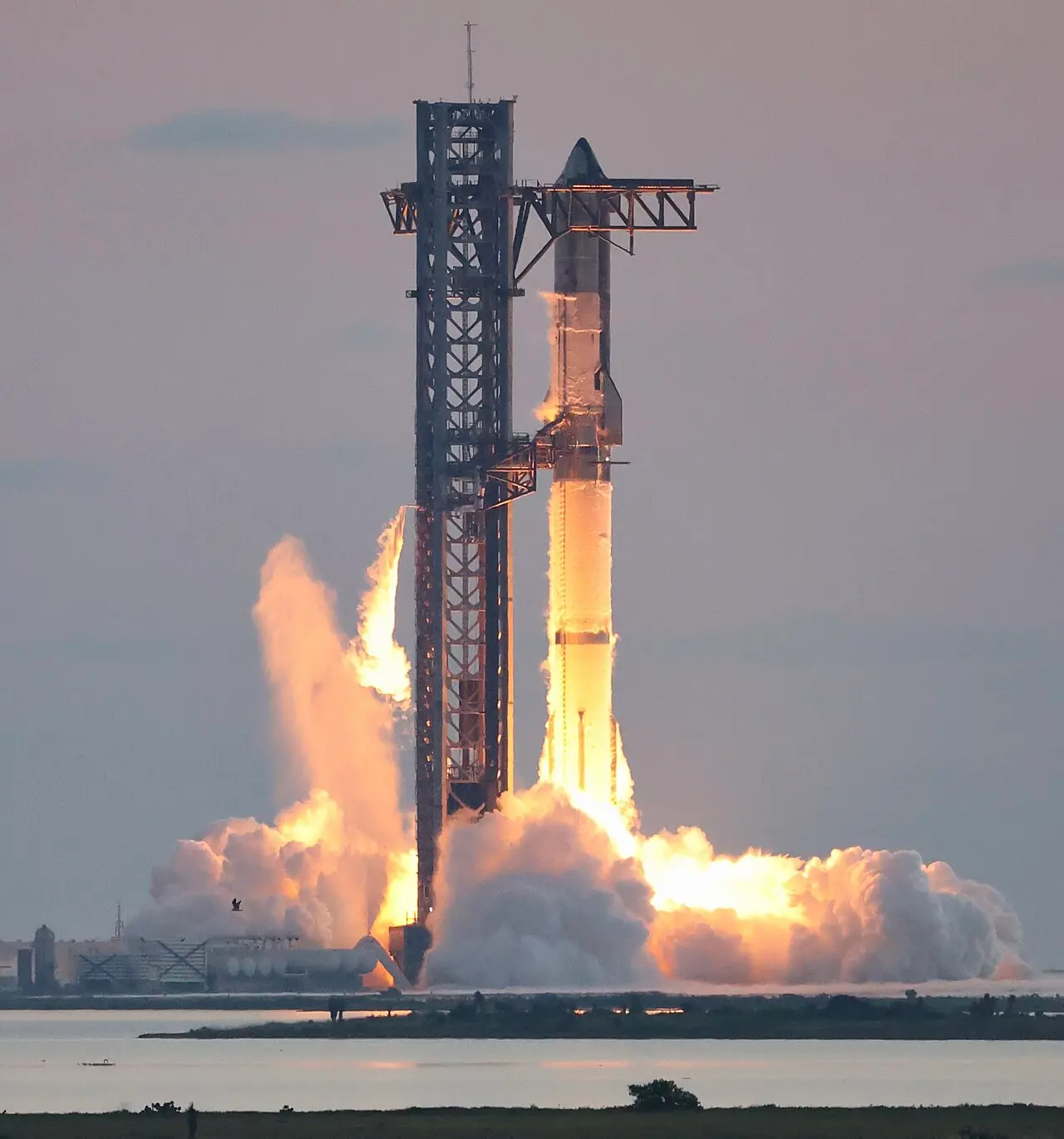
SpaceX caught the upper stage of its Starship rocket, Ship 42, with the launch tower's arms at Starbase, Texas, on Nov. 14, 2026, the first time it has recovered a Starship upper stage. The ship completed 14 orbits of Earth before returning to the launch site, Fox Business and Aerospace America reported. The catch came roughly 22 hours after launch, Fox Business said, while Tech Times put it at about 22.5 hours after liftoff and Teslarati described roughly 22 and a half hours in orbit.[5][8][6][7]
Tech Times put the catch at about 4:20 p.m. Eastern on Nov. 14. Aerospace America said the ship came in to land at 3:29 p.m. Central, which is 4:29 p.m. Eastern. SpaceX had planned the return for about 4:17 p.m. Eastern, Space.com reported before the flight.[7][8][1]
Flight 15 lifted off from Starbase at 5:47 p.m. Eastern on Nov. 13, 2026, and put the upper stage into orbit, according to Space.com. SpaceX opted not to catch the Super Heavy booster that evening and diverted it to the Gulf of Mexico, Gizmodo reported.[1][2]
The booster was a Version 3 Super Heavy, a design SpaceX began flying this year, powered by 33 Raptor 3 engines. A catch would have been the first successful recovery of a V3 booster. SpaceX previously recovered three of its earlier V1 boosters and flew two of them again, Space.com reported.[1]
PreviouslySpaceX plans over $74 billion for Texas, Arizona AI data centers
Why the booster catch was called off
Booster 22 cut its boostback burn short because of a low fuel mass condition, Tech Times reported. SpaceX's Kate Tice said early indications pointed to a low fuel mass alarm, Aerospace America reported. SpaceX's Dan Huot said the booster aborted itself because of a guidance, navigation and control issue it detected, Teslarati reported, while Tech Times said Huot later said guidance and control were not at fault.[7][8][6]
Elon Musk said on Nov. 14 that the booster ran short on propellant because its engines slightly underperformed, according to Teslarati. Musk said the loss "does not change our timeline" for high-volume, fully reusable Starship flights, Teslarati reported. Fox Business said the engines shut down early during descent and that engineers are investigating the cause.[6][5]
Teslarati reported that the booster hovered over the Gulf of Mexico before its flight termination system triggered and it came down in the water. Aerospace America said the booster exploded just before splashdown. Space.com had described a controlled splashdown on the night of the launch.[6][8][1]
What the upper stage did in orbit
A second engine burn of about 20 seconds placed the ship in low Earth orbit at an altitude of around 170 miles (275 kilometers), about 26 minutes after launch, Space.com reported. SpaceX commentator Dan Huot said on the webcast that Starship was in orbit "for the second time ever."[1]
The ship carried 26 of SpaceX's Starlink V3 satellites and deployed them over 42 minutes, starting 35 minutes after launch. Three of them carried cameras pointed back at the ship, according to Space.com.[1]
SpaceX had described a mission of more than 22 hours and about 14 orbits, as quoted by Space.com and Gizmodo. The ship completed 14 orbits before it fired its engines to leave orbit, Teslarati reported.[3][2][6]
What the ship catch means for reuse
SpaceX had caught Super Heavy boosters on three earlier flights but had never tried the maneuver with the ship, Space.com reported. "That was the missing link, the holy grail of spaceflight," Huot said, according to Aerospace America.[1][3][8]
SpaceX has not yet flown a caught ship again, Tech Times reported. Musk said on Oct. 10 that Flight 16 would aim to reuse both a booster and a ship, and SpaceX's Gwynne Shotwell said the company would try to refly an upper stage early next year, according to Tech Times.[7]
NASA Administrator Jared Isaacman wrote on X that the catch was "almost magic," Fox Business reported.[5]
Why the test matters for SpaceX and NASA
Flight 15 follows Flight 14 on Sept. 28, when the ship first reached orbit. That mission was planned as a 10-hour flight of about six orbits, but SpaceX deorbited early because of an engine issue, and the ship splashed down in the northern Pacific about three hours after liftoff, according to Gizmodo and Space.com.[1][2][3]
NASA selected Starship as one of the crewed lunar landers for its Artemis program. A Starship lander test article is due to fly in the Artemis III mission next year, which NASA plans as a two-week demonstration in low Earth orbit, Aerospace America reported. Space.com had put that mission in the summer of 2027.[8][1]
SpaceX also plans to spend more than $24 billion on an AI campus there as part of more than $74 billion for sites in Texas and Arizona, The Signal Edition reported on Nov. 13. The Starbase City Commission is due to consider a tax abatement on Dec. 9.[4]
What happens next
SpaceX has not announced a date for Flight 16, Tech Times reported on Nov. 15. Musk has said he expects Starship to reach a weekly launch cadence in the first half of 2027, Teslarati reported.[7][6]
Engineers are investigating why the booster's engines shut down early, Fox Business reported. At Starbase, the city commission is due to consider a tax abatement for SpaceX's planned AI campus on Dec. 9, The Signal Edition reported.[5][4]
Timeline
Starship Flight 14 reaches orbit for the first time; SpaceX ends the mission early because of an engine issue and the ship splashes down in the northern Pacific.[1][2][3]
SpaceX plans more than $74 billion for AI data centers in Texas and Arizona, including more than $24 billion at Starbase.[4]
Starship Flight 15 lifts off at 5:47 p.m. Eastern, reaches orbit and deploys 26 Starlink V3 satellites; the booster catch is called off and the booster is lost in the Gulf of Mexico.[1][2][6]
SpaceX catches Ship 42 with the Starbase tower arms after 14 orbits, the first recovery of a Starship upper stage.[5][6][7][8]
Sources
- Space.com: SpaceX launches Starship on ambitious 22-hour Flight 15 test, but aborts booster 'chopsticks' catch (video) 2026-11-13
- Gizmodo: Starship Flight 15 Lifts Off, SpaceX Fails to Catch Booster 2026-11-13T19:30:20Z
- Space.com: SpaceX will launch epic double-catch Starship Flight 15 test mission on Nov. 13 2026-11-09
- The Signal Edition: SpaceX plans over $74 billion for Texas, Arizona AI data centers 2026-11-13T19:52:22Z
- Fox Business: SpaceX makes history with first-ever Starship spacecraft catch at Texas facility 2026-11-14
- Teslarati: SpaceX makes history, catching Starship from orbit for the first time 2026-11-14
- Tech Times: SpaceX Starship Tower Catch Succeeds After 14 Orbits, but Booster Is Lost to Fuel Shortfall 2026-11-15
- Aerospace America (AIAA): SpaceX achieves first Starship tower catch 2026-11-14
Spotted an error? Report a correction. Read how we work.